



Minotaur
Monthly
Monthly
May 2026
.png)


.png)


.png)


.png)
.png)

.png)

.png)

.png)


.png)








Interested in Minotaur Capital?
Subscribe to receive monthly performance updates and quarterly commentary.
© 2024 Minotaur Capital Management Pty Ltd (Minotaur). All rights reserved. See our Privacy Policy.
Minotaur Capital Management Pty Ltd (ABN 17 672 819 975) is a corporate authorised representative (CAR 1308265) of Minotaur Licensing Pty Ltd (ABN 86 674 743 198) (AFSL 557080). The Minotaur Global Opportunities Fund is issued by K2 Asset Management Ltd (ABN 95 085 445 094, AFSL 244393), a wholly owned subsidiary of K2 Asset Management Holdings Ltd (ABN 59 124 636 782).
The information in this website (the Information) has been prepared by Minotaur.
For keyboard shortcuts, press ?
This information is for general information only and is not an offer for the purchase or sale of any financial product or services. The Information has been prepared for investors who qualify as wholesale clients under section 761G of the Corporations Act 2001 (Cth) (Corporations Act) or to any other person who is not required to be given a regulated disclosure document under the Corporations Act. The Information is not intended to provide you with financial or tax advice and does not take into account your objectives, financial situation or needs. Although we believe that the Information is correct, no warranty of accuracy, reliability or completeness is given, except for liability under statute which cannot be excluded. Please note that past performance may not be indicative of future performance and that no guarantee of performance, the return of capital or a particular rate of return is given Minotaur, K2 Asset Management or any other person. To the maximum extent possible, Minotaur, K2 Asset Management or any other person do not accept any liability for any statement in this Information.
Minotaur Capital Management Pty Ltd (ABN 17 672 819 975) is a corporate authorised representative (CAR 1308265) of Minotaur Licensing Pty Ltd (ABN 86 674 743 198) (AFSL 557080). The Minotaur Global Opportunities Fund is issued by K2 Asset Management Ltd (ABN 95 085 445 094, AFSL 244393), a wholly owned subsidiary of K2 Asset Management Holdings Ltd (ABN 59 124 636 782).
The information in this website (the Information) has been prepared by Minotaur.
For keyboard shortcuts, press ?
This information is for general information only and is not an offer for the purchase or sale of any financial product or services. The Information has been prepared for investors who qualify as wholesale clients under section 761G of the Corporations Act 2001 (Cth) (Corporations Act) or to any other person who is not required to be given a regulated disclosure document under the Corporations Act. The Information is not intended to provide you with financial or tax advice and does not take into account your objectives, financial situation or needs. Although we believe that the Information is correct, no warranty of accuracy, reliability or completeness is given, except for liability under statute which cannot be excluded. Please note that past performance may not be indicative of future performance and that no guarantee of performance, the return of capital or a particular rate of return is given Minotaur, K2 Asset Management or any other person. To the maximum extent possible, Minotaur, K2 Asset Management or any other person do not accept any liability for any statement in this Information.
The Minotaur Global Opportunities Fund returned +11.6% in May, 6.5ppts ahead of the MSCI ACWI (Net, AUD), which returned +5.1%. After a difficult period earlier in the year, May represented a strong recovery in performance and a pleasing validation of several areas where we had deliberately maintained conviction through volatility. Over the last twelve months we’ve delivered investors a return of 23.6% vs. 16.5% for the benchmark.
Building the team, one agent at a time
The most exciting development in May was the continued build-out of our AI-enabled investment team.
We now have 19 dedicated specialist AI agents working across the fund. Some are sector specialists. Akane covers defence stocks, for instance, while Salk covers healthcare. Others are more specialised. Baku, for example, focuses on Japanese shareholder activism, tracking which companies might become activist targets, how existing activist situations are progressing, and where governance reform is creating investment opportunities. Lazarus, our cross-sector deep-value analyst, is named for the opportunities the market has left for dead.
We have also added to our operations layer. Kairos has helped us schedule meetings for five months now; in May we added Cadence to support investor relations and distribution, and Metis to assist with finance and control functions. We will explore how these agents work in more depth in our June quarterly.
Unsurprisingly, our AI usage has risen sharply. By May, we had already spent more on large language models in 2026 than we spent across the whole of 2025. At first glance, that might sound concerning. But we think the right comparison is not last year’s software bill. It is the cost of building a human analyst team with comparable breadth. On that basis, 19 specialist agents still cost us less than one first-year investment analyst.
Importantly, they do not replace human judgement. They expand the surface area we can cover, keep more watchlists alive, push more questions back at us, and help us notice things faster. We still make every investment decision.
Living the AI demand story
Being at the coalface of AI adoption gives us a useful perspective on the companies benefiting from it. We are not merely reading about AI demand in broker reports. Our own usage keeps growing because the tools are becoming more useful, more embedded in our process, and more capable of doing work that previously would have required more people, more time, or both.
That lived experience is one reason we have remained constructive on the broader AI infrastructure theme. The AI boom is not just about one company selling chips. It is creating demand across an entire supply chain: chips, servers, data centres, electricity, cooling, networking, and memory.
In May, the strongest part of that story was memory. At the start of the month, we had an ~11% position in memory-related companies through Micron and SK Hynix. Both had an exceptional month.
The easiest way to understand memory demand is to strip away the NAND/HBM/DRAM/DDR5 acronyms. It’s simply this. Every AI system needs to process enormous amounts of data quickly. The more powerful and useful AI becomes, the more data it needs to move, store, and retrieve. That creates demand not only for the processors that do the calculations, but also for the memory chips that feed those processors with information. If the processor is the engine, memory is the fuel line. A more powerful engine is not very useful if the fuel line is too narrow.
This is why memory has become one of the key bottlenecks in the AI buildout. Demand is rising quickly, but supply cannot respond overnight. New capacity takes time, capital, and technical expertise. That imbalance is pushing prices higher and giving the best memory producers unusual pricing power.
We have been trimming around the edges as position sizes have grown, though the reduction reflects portfolio discipline rather than any change in conviction. The risk we watch most carefully is on the supply side. Meaningful new capacity does not arrive until 2027 at the earliest, which explains the tightness today, but a sharp slowdown in AI capital spending could shift the balance sooner than the market expects. What gives us confidence that this cycle has more durability than prior ones is the change in buyer behaviour. Large technology companies are no longer buying memory on short-term purchase orders. They are committing to multi-year supply agreements to secure components for AI infrastructure they are determined to build well into the future. That is a structural shift in how this market works.
The scale of that commitment is visible in company guidance that has been building all year. Alphabet guided to $175-185 billion in AI infrastructure spending for 2026 at their February results – roughly doubling the prior year in a single step – then raised that to $180-190 billion at their April results, with management guiding a further significant increase in 2027. Earlier this week, they went a step further: raising $80 billion by issuing new shares to help fund the buildout, including a $10 billion investment from Berkshire Hathaway, a firm not known for chasing technology trends. For a company that already generates tens of billions in free cash flow each year, choosing to raise outside capital rather than simply deploy its own is a deliberate signal about pace. Across the five largest US technology companies, the combined figure approaches half a trillion dollars this year alone.
At Morgan Stanley’s inaugural AI Summit in Taipei at the end of May, the message from companies in the supply chain was consistent with this. Bottlenecks are tightening across the system. Product cycles are accelerating. Khein-Seng Pua, CEO of Phison Electronics – one of Asia’s leading flash storage component makers – argued that this memory cycle could last a decade. We would not underwrite that as a base case, but we think the market is still underestimating how powerful the next few years could be for the leading memory producers.
The debate is not whether memory companies are cheap on this year’s earnings. In a cyclical industry, a low multiple can just as easily signal a peak as an opportunity. The more important question is how long the elevated earnings last, and that is where we think the market is still too cautious. Structural changes in how buyers procure memory, committed hyperscaler capex, and supply that cannot respond quickly together point to a cycle with more runway than typical. The stocks have moved, but the earnings duration has not yet been fully priced.
What our analysts found interesting this month
This month, we also asked our specialist analysts which stories they found most interesting. Two stood out: European banks and Eli Lilly.
European banks: boring can be beautiful
Our position in European banks has been a meaningful contributor, with UniCredit our preferred name in the sector.
For a long time, European banks were treated as value traps, and investors had good reasons to be sceptical. They spent a decade in regulatory purgatory, with interest rates stuck near zero and years lost to rebuilding capital after the financial crisis and the European sovereign debt crisis. European bank loan books barely grew from 2006 to 2019. That period of restraint has had an important consequence. European banks are now in much better shape, with the sector sitting on CET1 ratios averaging around 16%, far above what regulations require.
Capital levels are high. Balance sheets are stronger. Many banks are returning excess capital to shareholders. And, for the first time in a long time, they may be entering a genuine lending cycle. The market still tends to view European banks primarily as dividend and buyback stories. We think that may be too narrow. The more interesting possibility is that they are becoming growth stories again, albeit of a very different kind, one that is slower, more disciplined, and more profitable than in the pre-GFC era. UniCredit has continued to deliver strong earnings quarter after quarter, but we do not think the full story has yet played out.
Eli Lilly: disrupting itself before others do
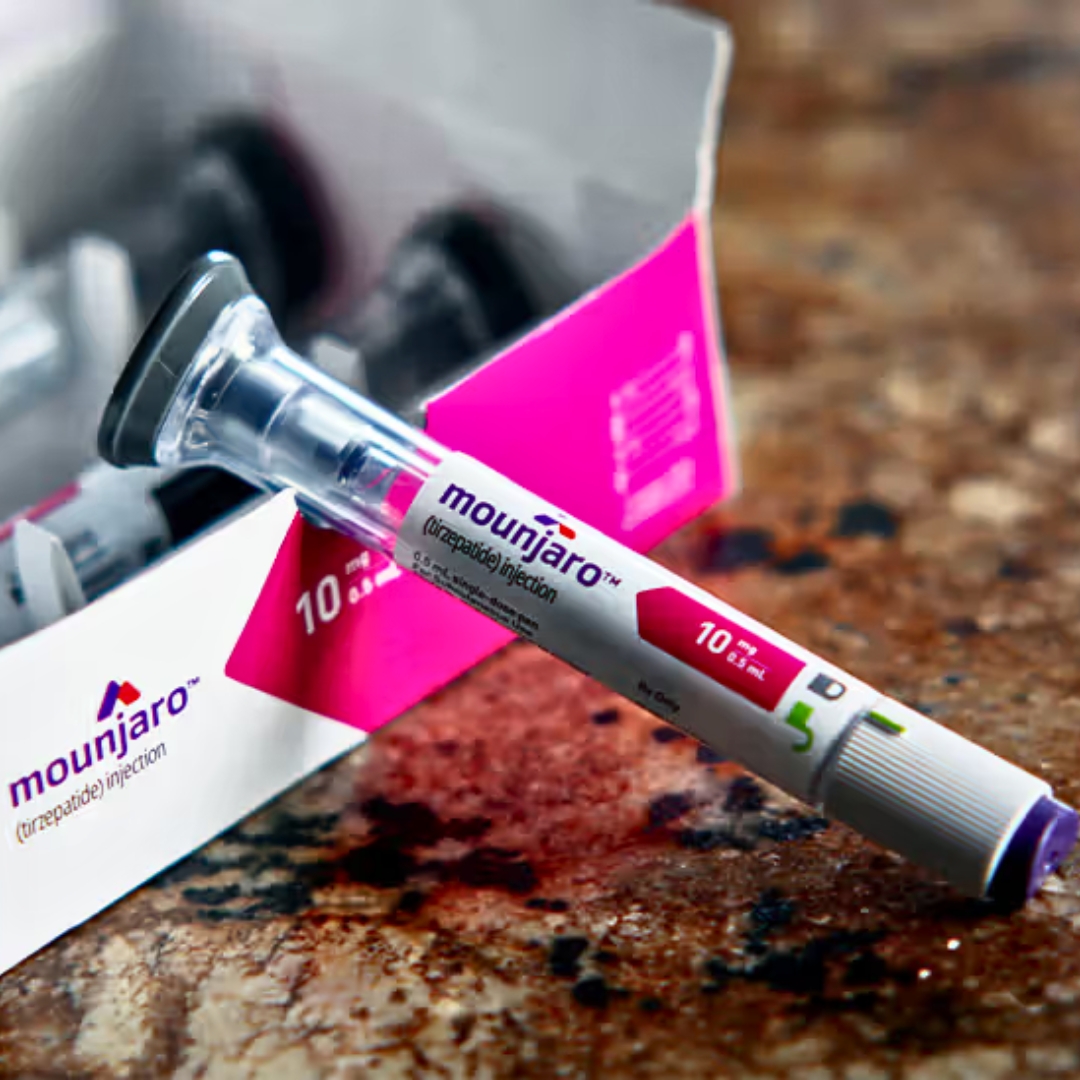
We remain bullish on healthcare, particularly Eli Lilly. The most common investor question on GLP-1 obesity drugs is simple: will something better come along and take share? Our answer is yes – but in Lilly’s case, the most important competitor may be Lilly itself. That is a good problem to have.
Lilly’s next-generation obesity drug, retatrutide, reported top-line Phase 3 data in May, with full results being presented at a major diabetes conference next week. Early results point to weight loss within the range usually associated with bariatric surgery. To put that in context, current injectable drugs like Wegovy and Ozempic have generally delivered around 15% weight loss, while Zepbound and Mounjaro have delivered around 20-22%. Bariatric surgery is closer to 25-30%. Retatrutide appears to have crossed into that territory with a drug – a significant step forward.
There are caveats. Some patients discontinued due to side effects, and commercial launch is unlikely before 2028 at the earliest. But the strategic signal matters: Lilly appears willing to disrupt its own blockbuster franchise before someone else does. That is exactly what we like to see in a long-term compounder.
The other important development is that Lilly’s oral obesity pill, orforglipron, has moved from future potential to commercial reality. A once-daily pill removes some of the friction associated with injectable drugs, with no needle, no refrigeration, and no injection routine. As access and adoption build, it could materially expand the market. For us, the Lilly thesis is not simply that obesity drugs are a large market. It is that Lilly has the scientific depth, manufacturing capability, and commercial execution to keep extending its lead.
Japan trip: governance reform enters Act 2
In May, the team travelled to Tokyo for the CLSA Japan Access Conference and the Morgan Stanley Japan Summit.
The main takeaway was that Japan’s governance reform is no longer a niche activist trade. It is becoming structurally embedded.
The first phase of Japan’s reform story was about balance sheets, with companies that had excess cash, underused assets, and poor capital efficiency being pushed to do better. That story is still alive, but we think the market is now entering a second phase. The focus is broadening from “return excess capital” to “run the business for growth, returns, and shareholders.”
This shift is supported by government policy, the Tokyo Stock Exchange, and a more active shareholder base. It is also why we built Baku, our Japan activist agent.
Japan is particularly interesting because it intersects with several themes we already care about deeply.
First, defence. Japan is moving to raise defence spending and is also gradually liberalising defence exports. That creates a more supportive environment for domestic defence suppliers and related industrial companies.
Second, AI infrastructure. Japan has exposure to parts of the AI supply chain that are less obvious than the headline chip names, including advanced packaging, materials, server components, and memory-related suppliers.
Third, energy security. Discussions in Tokyo repeatedly came back to power, from nuclear restarts and gas turbines to LNG supply, data-centre demand, and next-generation nuclear technologies. The Middle East crisis has reinforced the point that reliable energy is not merely an environmental issue or a cost issue. It is a national security issue.
Overall, Japan feels increasingly investable to us – not because every company is suddenly high quality, but because the direction of travel is improving and the pressure for change is becoming harder to ignore.
Staying close to the work
May was clearly a strong month for Minotaur. But we do not think the lesson is simply that a few positions went up. The more important lesson is that we need to keep living and breathing the areas where we invest.
In AI, that means using the tools ourselves, not just investing in the companies selling the infrastructure. In Japan, it means spending time on the ground and understanding how policy, governance, and corporate behaviour are changing. In healthcare, it means looking beyond the next trial readout and asking which companies can keep renewing their own franchises.
The work is compounding. The tools are improving. The opportunity set remains broad. As Hypatia said, “Life is an unfoldment, and the further we travel the more truth we can comprehend. To understand the things that are at our door is the best preparation for understanding those that lie beyond.”